Banganga Tank

About

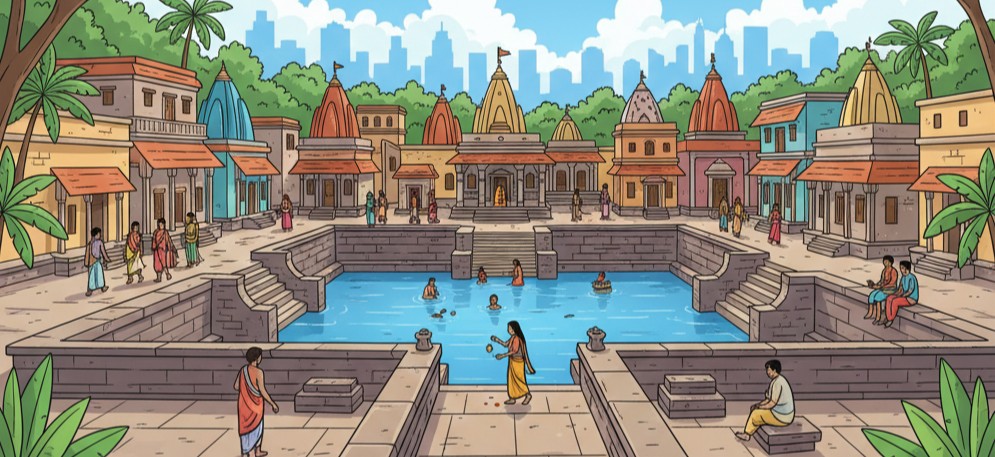
Banganga Tank in Mumbai is one of the city’s most atmospheric heritage spots, blending mythology, spirituality and old-world charm. Located within the Walkeshwar Temple Complex at Malabar Hill, this ancient freshwater tank is believed to date back to early historical periods and carries deep cultural significance.

The surroundings offer a rare glimpse into the past, where narrow lanes, traditional homes and centuries-old shrines create a living heritage setting. Visitors often begin their journey at the stone steps, observing rituals, daily prayers and local residents feeding ducks and turtles in the tank.

This calm environment attracts photographers, heritage walkers and culture seekers interested in understanding the roots of Mumbai. Guides often narrate the legend of Lord Rama, who is said to have shot an arrow to the ground to bring forth a freshwater spring, inspiring the name Banganga.

  • Ancient stone steps offering beautiful views of the tank
  • Heritage homes and lanes surrounding the complex
  • Morning and evening rituals performed by devotees
  • Local life and cultural traditions continuing around the ghats
  • Excellent photography opportunities capturing Mumbai heritage charm


With its peaceful ambience and spiritual history, Banganga Tank is a refreshing contrast to the busy city. Its closeness to Hanging Gardens, Malabar Hill viewpoints and Marine Drive makes it a convenient addition to Mumbai sightseeing plans.
History

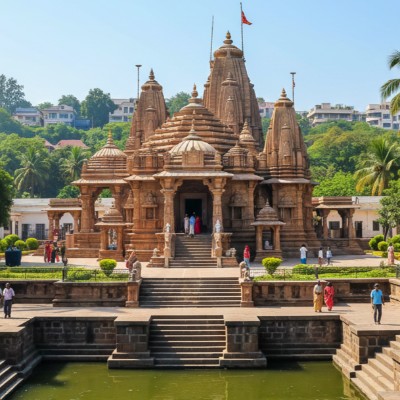
Banganga Tank, a historic landmark in Mumbai, is deeply rooted in mythology and early settlement history. The tank is believed to have originated during the Shilahara period and later gained prominence under various rulers and local communities who maintained the sacred site.

According to legend, Lord Rama shot an arrow into the ground to create a freshwater spring here while searching for Sita, giving rise to the name Banganga.

Over centuries, the Walkeshwar Temple Complex evolved around the tank, becoming a centre of religious activity, festivals and local traditions.

  • Built during the Shilahara dynasty and later restored by local rulers
  • Associated with the legend of Lord Rama and the creation of holy water
  • Served as a central point for the Walkeshwar Temple Complex
  • Important site for rituals, traditional festivals and early settlements around Malabar Hill
  • Survived multiple phases of urban change, retaining its cultural identity


Facts & Figures

Banganga Tank offers a blend of cultural, architectural and environmental elements that make it one of Mumbai most distinctive heritage sites.

Its age, religious significance and continuous use by local communities contribute to its unique character. The tank’s structure, surrounding temples and natural spring make it a rare example of a living historical landmark.

  • Approximate age believed to be several centuries, with origins linked to the Shilahara period
  • The tank measures roughly 135 metres in length and 45 metres in width
  • Fed by a natural freshwater spring that flows continuously
  • Surrounded by multiple shrines, priests’ residences and traditional homes
  • Hosts festivals, rituals and cultural events throughout the year
  • Attracts pilgrims, tourists and heritage photographers


Current Scenario

Banganga Tank today remains an active spiritual and cultural hub in Mumbai, continuing to attract devotees, tourists and heritage enthusiasts. Despite the city’s rapid development, the tank and its surroundings have retained their old-world charm.

The lanes, shrines and ghats still function as part of daily local life, while heritage groups often organise walks and cultural programs to highlight its significance. The area maintains a peaceful ambience compared to other parts of South Mumbai.

  • Regular religious rituals and daily prayers continue at the ghats
  • Photographers and heritage tourists visit throughout the year
  • Occasional cultural events and heritage walks are organised
  • Local community plays an active role in maintaining traditions
  • Area remains peaceful despite urban surroundings
  • Conservation discussions continue for long-term preservation


Cultural Experience Around Banganga

The area around Banganga Tank offers visitors an immersive cultural experience reflecting Mumbai traditional roots. Early mornings include devotional chants, temple bells and local rituals.

The lanes feature old stone houses, wooden balconies and shrines that highlight the charm of the city's past. Travellers exploring the inner alleys often meet priests, musicians and local residents who share traditional stories.

Walking through the neighbourhood reveals the continuity of cultural heritage surrounding Banganga.

  • Early morning temple rituals and chanting
  • Traditional homes, balconies and stone pathways
  • Friendly local community sharing stories and traditions
  • Musicians and priests connected with the Walkeshwar Temple
  • Heritage walks exploring art, culture and mythology
  • Quiet corners ideal for spiritual reflection
0411
Best Time to Visit

The best time to visit Banganga Tank in Mumbai is during the cooler months, when the weather is pleasant for exploring the heritage lanes and temple complex. Early mornings offer a peaceful atmosphere with rituals, calm water and fewer crowds.

Winter months are ideal for photography and cultural walks. Monsoon season, though scenic, can make the stone steps slippery and some lanes less accessible.

  • November to February offers pleasant weather for sightseeing
  • Early morning hours provide a peaceful spiritual ambience
  • Evenings suitable for walks and photography
  • Monsoons may cause slippery ghats and limited movement
  • Festival days add charm but attract larger crowds


Timings, Entry Fees & Rules

Banganga Tank in Mumbai is accessible throughout the day as it functions as an active religious and residential space. There is no formal entry gate or ticket requirement, allowing visitors to explore freely.

Mornings and evenings are preferred for a peaceful experience. As it is a sacred site, visitors are expected to follow basic guidelines on conduct and cleanliness.

  • Timings: Open 24 hours; ideal hours are morning and evening
  • Entry Fee: No entry fee for any visitor
  • Photography allowed but avoid disturbing devotees
  • Maintain silence during rituals
  • Remove footwear near temple areas
  • Avoid littering and respect local customs
  • Disclaimer: Timings and rules may change; check locally or enquire with temple authorities


How to Reach

Reaching Banganga Tank in Mumbai is convenient due to its central location at Malabar Hill. The area is well connected by road, with taxis, buses and local transport available. Since the tank lies inside the Walkeshwar Temple Complex, a short walk through residential lanes leads directly to the ghats.

  • By Air: Nearest airport is Chhatrapati Shivaji Maharaj International Airport, around 25–30 km away; taxis available via Western Express Highway and Marine Drive

  • By Train: Nearest major station is Mumbai Central (6–7 km); local trains to Charni Road or Grant Road, followed by taxi or bus

  • By Road / Metro: Direct taxis to Walkeshwar; BEST buses connect Malabar Hill; metro stations a few kilometres away with taxi recommended

  • Nearby Landmarks: Walkeshwar Temple, Malabar Hill, Hanging Gardens


Tips & Hacks

Visiting Banganga Tank in Mumbai can be a memorable experience when planned with a few simple tips. The cultural depth and peaceful surroundings make it ideal for slow exploration.

As the tank lies within an active religious community, following basic etiquette ensures a respectful visit.

  • Visit early morning for peaceful ambience and better photography
  • Wear comfortable footwear that can be easily removed
  • Avoid loud conversations near temple areas and ghats
  • Keep valuables safe during festival days
  • Carry drinking water, especially in summer
  • Respect privacy when photographing local homes or rituals
  • Ideal visit duration: 30–60 minutes
  • Heritage walks with guides offer deeper cultural insights
0811
Recommendations for Tourists

Banganga Tank in Mumbai offers a meaningful cultural experience for all visitors. Its spiritual ambience, heritage lanes and active rituals make it a rewarding stop for both local and international tourists.

  • For Local Tourists: Visit early morning; great for spiritual visits and photography; combine with Malabar Hill and Hanging Gardens
  • For International Tourists: Hire a heritage guide; learn basic temple etiquette; pair with a South Mumbai heritage tour

  • Suggested Itinerary: Best added to a half-day South Mumbai plan

  • Carry light essentials and avoid heavy bags

  • Be mindful of ongoing religious practices


Food Courts / Food Options Nearby

Food options near Banganga Tank in Mumbai are centred around Walkeshwar, Malabar Hill and Chowpatty.

While there are no large food courts beside the tank, visitors will find vegetarian cafés, family restaurants and popular street stalls within a short distance.

  • Walkeshwar Café: Vegetarian snacks and tea (Approx. ₹100–₹150)
  • New Kulfi Centre, Chowpatty: Famous kulfis and desserts (Approx. ₹80–₹150)
  • Cream Centre, Chowpatty: North Indian and multi-cuisine meals (Approx. ₹350–₹550)
  • Soam, Babulnath: Gujarati and Mumbai dishes (Approx. ₹350–₹500)
  • Status Vegetarian, Nariman Point: South Indian and thali meals (Approx. ₹350–₹600)
  • Chowpatty street stalls: Bhel, pav bhaji, chaats (₹50–₹150)


Must-Try:
Chowpatty Kulfi (₹80–₹120), Pav Bhaji (₹120–₹200), Soam’s Gujarati thali (₹350–₹500)

  • Great area for vegetarian food
  • Carry cash for small stalls
  • Premium dining options available at Marine Drive and Nariman Point


Additional Notes / Fun Facts

Banganga Tank features several interesting stories and cultural elements that make it more than a heritage site. Despite its location near the sea, the tank contains freshwater believed to come from a natural underground spring.

The neighbourhood has deep ties to classical music, where musicians often gathered in the early 20th century.

  • The freshwater is believed to originate from a natural spring
  • The name Banganga comes from the legend of Lord Rama and his arrow
  • The Banganga Music Festival is a major cultural event
  • The surrounding houses form one of the oldest settlements in Mumbai
  • Ducks and turtles in the tank attract photographers
  • The ghats have appeared in documentaries and cultural films
3214


Places Nearby Banganga Tank
Frequently Asked Questions
Q1: What is the significance of visiting Banganga Tank in Mumbai?
A1: Visiting Banganga Tank in Mumbai is significant because it is a sacred heritage site known for its ancient freshwater tank, spiritual rituals and cultural history linked to Lord Rama.
Q2: What is the entry fee for Banganga Tank in Mumbai?
A2: There is no entry fee to visit Banganga Tank in Mumbai; it is completely free for all visitors.
Q3: What are the visiting hours of Banganga Tank?
A3: Banganga Tank is accessible 24 hours a day, but early mornings and evenings are the best times to visit.
Q4: Why does Banganga Tank have freshwater despite being near the sea?
A4: Banganga Tank contains freshwater due to a natural underground spring, which is believed to have mythical origins linked to Lord Rama.
Q5: What is the mythological story behind Banganga Tank in Mumbai?
A5: According to legend, Lord Rama shot an arrow into the ground to create a freshwater spring, giving the site its name Banganga.
Q6: Is photography allowed at Banganga Tank in Mumbai?
A6: Yes, photography is allowed at Banganga Tank in Mumbai, but visitors should avoid disturbing rituals or invading local privacy.
Q7: How much time is enough to explore Banganga Tank?
A7: Visitors generally need around 30–60 minutes to explore Banganga Tank comfortably.
Q8: Which is the nearest railway station to Banganga Tank in Mumbai?
A8: The nearest major station to Banganga Tank is Mumbai Central, while Charni Road and Grant Road are the closest local train stations.
Q9: Is Banganga Tank safe for solo travellers?
A9: Yes, Banganga Tank is generally safe for solo travellers, especially during daylight hours due to its residential and religious surroundings.
Q10: What is the best time to visit Banganga Tank in Mumbai?
A10: The best time to visit Banganga Tank is from November to February, especially during early mornings for peaceful ambience.
Q11: Are there any festivals celebrated at Banganga Tank?
A11: Yes, the famous Banganga Music Festival and several religious events are celebrated around Banganga Tank.
Q12: Is Banganga Tank suitable for heritage walks?
A12: Yes, Banganga Tank is one of the most popular stops for heritage walks in Mumbai, offering cultural stories and historical landmarks.
Q13: How do I reach Banganga Tank from Marine Drive?
A13: To reach Banganga Tank from Marine Drive, visitors can take a taxi directly to Walkeshwar, which is a short and convenient route.
Q14: Is there any dress code for visiting Banganga Tank?
A14: There is no strict dress code at Banganga Tank, but modest and respectful clothing is recommended due to the presence of temples and rituals.
Q15: Are guided tours available at Banganga Tank in Mumbai?
A15: Yes, several heritage walk groups and certified guides offer tours of Banganga Tank and the Walkeshwar area.